
Metal can production methods
Production of cans made of coated tin sheet, contrary to the public opinion that it is easy, requires knowing many new skills and modern technologies. The accuracy and dimensions of parts in production equipment and machines are subject to micron tolerances, which places this industry in the group of precision industries. The most important types of cans are food or non-food metal cans in three pieces or two pieces.
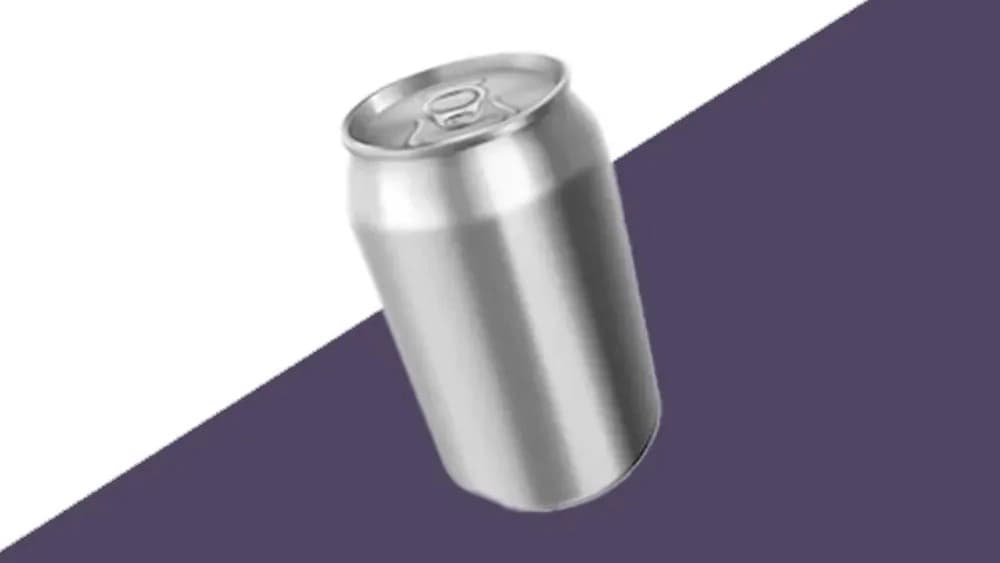
- 3-piece can
2-piece can
1. Two-piece cans (DI: Drawn & Wall Ironed can: Long two-piece cans that are formed by the operation and ironing of sheets in a drawing mold, and their bottom and body are of the same material.
2. Two-piece drawing cans: Two-piece cans are produced with a drawing process with a lower ratio of drawing and material flow into the mold, and the body and bottom of the can are of the same material.
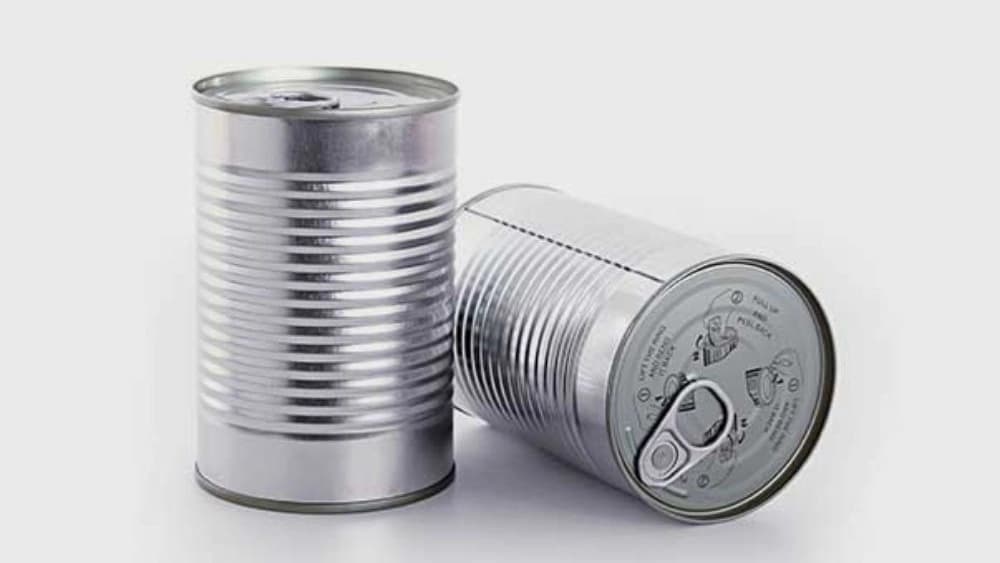
Three-piece can production steps
1. Varnish coating of coated tin sheet in the varnishing line
2. Cutting of body parts of the can (Body Blank) in the Doublex Slitter machine
3. Production of the cylinder of the can body in the body making machine
4. Covering the welding seam of the body from the inside with powder or varnish in an electrostatic way to protect this part from corrosion
5. Baking and sticking the powder (or varnish outside the seam) to the body cylinder In a special oven (Seam Coating Curing Oven)
6. Carrying out operations: dividing the body (Parting), beading, changing the shape of the cross section of the can, turning the edge of the body (Flanging), sewing the floor to the body (Seaming), which is done in one or more stages and in one or more machines according to the needs and the type of equipment used at the end of the production operation.
Two-piece can production steps
1. Varnishing of the coated tin sheet in the lacquering line
2. Cutting the body sheets in a zigzag shape or simple or without cutting in the sheet feeding method
3. Feeding the coated tin sheet into the press and producing a two-piece stretchable can with a turned edge in a special press where drawing and redraw, trimming and turning the edges are done at the same time. Most canning lines in Iran have been equipped with new and modern machines during the last decade. The tendency to use thinner coated tin sheets in order to save on the consumption of raw materials is one of the main characteristics of these lines.
Decreasing the thickness of the sheets, along with increasing the production speed, requires compliance as much as possible with the different qualitative ranges required in the production of raw materials, especially coated tin sheets. It should be mentioned that the design printed on the two-piece stretchable cans is designed with a special software. In these types of cans, the design printed on the sheet finds its original shape after being stretched. The Spanish company Logitech is one of the centers that provides this service and many Iranian companies order their designs from there. The amount of oil and its uniform distribution and life are very important in the quality of lacquering and sheet coating operations. It is better to control and examine this oil with conventional methods before entering the coating process.
Some of these methods are as follows:
1. Water-break test: It is considered the easiest method to ensure the presence of oil on the sheet. 2. Ellipsometer test: It is the most common method to determine the thickness of oil, which is done with the help of a device of the same name based on optical principles. It has been replaced by easier and faster methods. This method is described in the ASTM A623 standard and it is based on removing oil from a certain surface of the sheet with the help of a boiling solvent such as chloroform and measuring the remaining oil after the evaporation of this solvent.
9. Packaging of coated tin sheet: Improper packaging and the ability to penetrate the moisture of the environment until the time of use, along with the strong permeability caused by the surface tension between the sheets, cause irreparable damage to this industrial production.
Combined classification of tin plated sheets
Can manufacturers consider a combination classification for coated tin sheets. This classification includes seven combinations, from the softest sheet that can be produced in the factory (T-1) to the hardest sheet that can be used by can manufacturers. Regarding this classification, it can be said that:
T-1 and T-2 sheets are used for stretched containers such as the body of fish cans and lids. T-4 and T-3 sheets are specially designed for the body of processed food cans. T-5 sheets are for cases that require more resistance in terms of bending or high resistance to pressure. T-6 sheets are not used for food cans and are only used for the two ends of beer cans. T-U sheets are resistant to heating and cooling continuously. With the electrolyte method, we can put different amounts of tin on the surface of the steel sheet, for this reason we have the following divisions in terms of tin weight per square meter:
E1=2.8 grams of tin per square meter of steel sheet
E2=6.5 grams of tin per square meter of steel sheet
E3=4.8 grams of tin per square meter of steel sheet
E4=11/2 grams of tin per square meter of steel sheet
In this case, the sheets are based on the weight of the tin Usage per square meter of steel sheet is divided.
DWI process
In the DWI process, steel or aluminum is first rolled into a coil with a specific thickness. (for steel 0.3 mm and aluminum 0.43 mm) from the said coils, plates or circles are made using a punching machine, which are made into a glass using a press machine. The resulting glass is then successively hammered by a process called Wall-Irand by passing through an iron ring, and during this process, the thickness of the glass reaches one third of the initial thickness and its height reaches three times the initial height with a fixed diameter, and then in order to obtain the desired height and They cut the excess height of the can and finally, the excess oil added in the forming process is removed from the can by washing and by passing the clean can through the printing rollers, they decorate the outside of the can in a suitable shape. It is done in order to evaporate the solvent. It is obvious that the type of varnishing system and the number of varnish layers depends on the material of the can (steel or aluminum) and the type of product that is going to be packed in it. TFS sheets are not suitable for the DWI process because the chrome layer cannot withstand the hammering of iron rings.
DRD process
In practice, DRD cans were prepared with the same initial steps as described for DWI cans. But in these cans, the height and final diameter of the containers are further processed during the process or stretching by impact on the glass, and in this way containers with a smaller diameter are prepared. DRD containers are commonly made from TP, TFS sheets. The varnish used inside the containers depends on the type of can and the type of food used in the packaging, and epoxy phenolic or vinyl varnishes are usually used for this purpose. Two-cloth cans have many advantages, especially in terms of economy and appearance compared to three-cloth solder or resistance welding cans. In general, the containers produced by the DWI method have a relatively thin wall, which is suitable for the packaging of carbonated drinks. Because they have the ability to withstand internal pressure, but in DRD cans, the body has a thicker body, so they are used for packaging foods that require heat after sealing. Choosing TP or TFS or aluminum sheets for the production of two-piece cans is an economic issue that depends on the price of these sheets.